I've been in a bit of an odd place recently. I made some major life changes, and it's left me feeling pretty empty. I mostly stopped drinking, and it's amazing how much of my social life that was, and how much that has affected some of my friendships. I'm taking much better care of myself. And, wonderful as it is, it feels so much less fulfilling right now. Sleeping eight or more hours a night is taking time out of other things in my life. It's devastatingly hard. But now that my body is getting used to it, I realize how much I need it.
I suppose I'm confused. I'm taking good care of myself, I'm doing my responsibilities, I'm volunteering fifteen hours a week. Why am I feeling so meaningless? Going to the gym is such a struggle right now. Not to mention getting out of bed. Every day, I have to convince myself to get up. The only thing that gets me up is work or classes, and sometimes, that isn't even enough. I went to three classes this past week. That's not okay, and that's not like me. I am feeling wholeheartedly unmotivated. And I have no idea why. I know I'm not spending as much time partying and hanging out with friends, but those things weren't necessarily adding much to my life. I suppose they may have been covering up a void. But now that those "coping" mechanisms are gone, I'm not sure how to replace them, nor do I feel I have the energy and willpower to do so. I suppose I'm feeling stuck. And it's because I don't want to face what I am feeling inside: completely lost. I don't know where I'm heading right now, and I don't know myself. And the process of self-discovery is terrifying.
I don't really have another choice. Here goes nothing!
Saturday, February 15, 2014

Wednesday, December 4, 2013
Final Project
When I wrote the proposal for this project, I said that it would discuss the importance of emotional connection and how that happens with so many mediums. However, in the last couple of months, this has been something that has been quite a challenge for me to do. I’ve been battling mental illness my entire life; major depression showed up six years ago. And, as it always tends to do in difficult and challenging times, my depression decided to rear its giant, terrifying, and mean head in the last two months. I’ve been in a state of perpetual vulnerability. While that is wonderful, as there are so many opportunities to learn and grow when we are at our most vulnerable, it has also been decidedly scary and almost life-threatening.
This left me at a bit of a confusing crossroads. My project was supposed to be arguing the importance of connection, yet, in my own life, I was finding that I had to disconnect in order to keep it together and make it through the day. How does that add up? How can I make sense of these two seemingly opposing ideas?
I don’t know that I have a definitive answer to this question. It’s something I’m currently wrestling with, and probably will for years to come. But here are my thoughts on the matter.
To begin my exploration, I will discuss emotion. There are many theories that “describe” emotion; there are two in particular I would like to discuss. One is cognitive appraisal theory, which essentially states that emotions are subjective reactions that occur based on whether or not actions or situations contribute to furthering a goal of an individual. There are also much more physiologically based explanations that state that emotions are what occur when we notice physiological changes in our bodies. What I personally believe is a combination of the two theories: that emotions are a subjective interpretation of events that occur in our lives and are simultaneously affected by our physiological reactions to those events.
Emotions allow us to connect to others, to make decisions, and to protect ourselves. They provide opportunities for growth and opportunities to strengthen and enjoy what is already present in our lives. In my opinion, they allow us to feel alive.
The beginning of the semester was very exploratory for me. I came to this class, I opened my mind to a completely new way of thinking, and I took in all I could from this course, its texts, and the discussion of my peers. I sucked the marrow out of this experience, so to speak. Eventually, I realized this was wholeheartedly overwhelming.
I left this class feeling out of control every day. Some days I would get home and burst into tears. Others, I would be in a rage. More than a few I left feeling helpless and suicidal. This scared the shit out of me. How come I was leaving class with such strong emotional reactions? What was I doing wrong? Why was I feeling so vulnerable and confused?
I soon realized that I was somehow tapping into parts of myself that hadn’t been accessed in years. Not since high school, undoubtedly the more difficult and darkest years of my life thus far. I was excited and frustrated, for, as my therapist always says, we can only truly deal with our demons until we go there, we experience them, we fully invite them into our being and accept them in their entirety. So something in this class was pushing me to deal with all of these emotions that I’ve been pushing away for some time.
I got stuck on the why, as I so often do. Why is this class triggering me? Why am I so emotional? When no answers came, I moved on to where. Where is this all coming from? Where does Dr. Sexson get these crazy ideas about life and mythology and that everything is repeated? Who gave him the authority to decide this? And I got mad. And confused. And it always came back to this class. Every time. Something in this class was getting under my skin.
Most days, I leave this classroom with a heightened heart rate. Sometimes, I’m warm, heated, noticeably upset. Others I am quiet, slow, more subdued. There have been a few where I leave neutral, as I came in, disconnected. There are even a few where I left happy, uplifted, inspired. The majority, however, I left feeling some sort of negative reaction.
This frustrated me. Thus far in college, I have been able to skate by and do what I needed, write papers, read books, “memorize” information, and not really gain anything from the process. And, at the same time, it didn’t hurt. So while I wasn’t necessarily learning or growing, I also wasn’t struggling emotionally each and every day.
But this class. This class is different. Last semester, I decided I wanted to take a class that would challenge me. I wanted something that would make me think. I was hesitant to take this course, for I knew it would be different from anything to which I was accustomed. But I decided to do it. To put my neck out there and try something new. And as disappointed as I may have seemed thus far, I wasn’t.
As you may recall, I was very resistant to the idea that life is mythology continually repeated in different bodies. This notion drove me crazy for the first six weeks of class. I hated it. I perceived it as very disempowering, as if I didn’t have control over my actions. Even when Dr. Sexson explained to me that if I am aware, I have the power to choose the myths I embody, I was still frustrated.
After some time, some frustration, lots of tears, and lots of confusion, I’ve figured out why this class has been such a challenge for me. I have been resisting, with every ounce of my being, the idea that Dr. Sexson is right.
You know how they say acceptance of a problem is the first step in recovery? I wholeheartedly believe that, partially because I’ve been brainwashed by therapy, and partially because it makes logical sense. Once I started to entertain the idea of my life being displaced myth, it all sort of fell together. And I seemingly fell apart.
I realized that, while each day is a brand new day, I come into them with the same stories and feelings and experiences that I have had with me for my entire life. Yes, new things are added, and yes, some things eventually fade away. However, those feelings, those emotions, those ideas, those perceptions, those wishes, those desires, those needs, those questions, those fears… They are all there. They are all a part of me. And they are displaced into each and every new day.
There are emotions that I haven’t touched in years. They’ve come up slightly, and I’ve pushed them away. Some of the darkest depths of my being are parts of me that I was born with, that I’ve experienced, and that will be a part of me until I die. However, they are parts of me that I have to accept and embrace in order to have power over the myths I displace and therefore the path I choose. Fighting their reality will get me nowhere.
My therapist said something the other day that astounded me. We were talking about my feelings the previous evening and how everything hurt so badly and how I felt so empty and yet so overwhelmed at the same time. I couldn’t put into words everything I was feeling, because, as Emerson theorizes, all language is essentially analogy, and an inadequate analogy at that. I was frustrated and confused and starting sinking into those feelings again. I felt them come up, envelop me, take over every piece of who I am. She asked me how I felt. I was scared. I was alone. I was empty. I was bombarded. I was out of control. I was desperate. I was scared.
Then she asked a question.
“Can these feelings kill you?”
I thought about it. At first, I thought, of course! Have you not been listening to me? Have you not heard my life’s history? I was angry. Insulted, even. Then I realized something. It was not the emotion that almost killed me. Rather, it was my actions. I may have felt suicidal, but the feeling itself did not stop my heart from beating. That’s when I realized emotions are stories in my head, responses in my body, cultural scripts that I read. They are socialized. They are universal. They are harmless. They are necessary. They are vital to finding meaning in my life. They are nothing, and they are everything.
I am my own myth. I have many emotions. Some of them repeat themselves daily; some of them take years to pop up again and remind me they exist. Yet they always seem to reappear. Sometimes they are new or a little different, based on the situation. Sometimes they are shared with different people in my life than the previous time. Sometimes they are experienced on my own. But these same core emotions keep showing up, all because of some story being told, some myth being played out in my life that allows me to experience life the way many before me have.
Yes, sometimes, I have to take a break and put my emotions on the back burner for a bit. I can’t always be 100% on and connected and feeling everything. But that’s isn’t wrong and it doesn’t mean I’m not living my life. It’s a defense mechanism that has been around since the beginning of man; it’s simply another myth.
Sometimes there’s an obvious connection between my life and a classic Greek myth. Sometimes that connection is a bit more blurry. These connections, however, are all based on situations that bring up particular emotions. Regardless of the theory of emotions you believe, we all experience emotions and we all experience many of the same emotions. This is why we are able to empathize. This is why we are able to connect with one another over mutual (and sometimes seemingly unrelated) experiences. And this, above all else, is why the notion of life being displaced myth truly works.
Tuesday, December 3, 2013
The Maddening Task of Memorizing Kubla Khan
As the title implies, this memorization task has been a bit of a struggle for me. The last time I had to memorize a poem was in 6th grade Honors English, and I’m fairly certain it was a 20 line poem. And it was much easier than Kubla Khan. Kubla Khan is quite the project to tackle. I find myself back and forth. If I just say it, it makes no sense. When I feel it, it makes sense. But then I don’t know what I’m saying. And I’m still not sure that it is ingrained enough in my memory for me to feel it and perform it as it was intended.
I’ve found myself reading several cultural scripts to a) put off memorizing this poem and b) excuse myself from memorizing it. I said I could do it; I always pull things off in the end. I said that I can’t do it, that I’m a product of my generation, used to having anything and everything available at the click of the button. Excuses, excuses! I have plenty.
As I’ve buckled down and worked on memorizing, I’ve let out far more f-bombs than I can proudly state. It’s hard! It’s a sweet and miserable challenge! I’m having a hard time not going AWOL with my language right here. But I digress…
Why is it that memorizing things has become so difficult for me? I can memorize concepts and explain them. So why is this a challenge? It is 3 stanzas, 54 lines, 349 words, barely more than a page. I know hundreds of songs, if not thousands. I thought of putting this to the tune of a song I know. It didn’t feel right. I feel an immense pressure to do this poem justice. I don’t want to simply put it to the tune of some Lady Gaga song. It has to be performed. As I said after Brady performed it a week ago, I felt it made sense for the first time when it was recited in this way.
It’s a poem. It’s just a poem. Is it just a poem? What is it? Why is it so important? Why has it held up so well over time? SO MANY QUESTIONS! STOP!
There is something here that “makes me a part of my generation:” my desire for perfection. Perhaps my environment is more appropriate. I was raised by college educated parents, and going to college was never an option. I worked myself til I was sick so I wouldn’t have to worry about getting into a school and I could have as many options as possible. I was a 4.0 student at the best all-female high school in the city. And then I fell apart. I couldn’t handle it anymore. I gave up. But I didn’t. I became dysfunctional, but I’ve never let go of the desire for perfection, nor will I likely ever.
So where does his leave me? How does this relate to the task at hand?
I have been given the assignment of performing a classic Romantic poem in front of a class of very unique and intelligent individuals. What a task! It’s a bit terrifying because it’s so very vulnerable. The thing is, I can only perform this poem if I truly open myself up to it and let it run through me, baring my soul in the process. That’s scary as hell. And if I’m gonna do it, I want to do it right. No half-hearted attempts here. It has to be spot on.
This kind of pressure can be crippling. It’s also completely internal, so I can get rid of it at any moment. However, because of my love for extremes, I find getting rid of that flips me to excuses. So this memorization task has been a serious test in my ability to find balance in my life.
The thing is, I don’t think a balanced performance of this poem is adequate. That’s not how poetry of this magnitude is to be performed. As I said, it has to be felt, to flow through me. So how do I exercise balance in my mental attitude toward the assignment while putting myself into it wholeheartedly? Is this the ultimate exercise in balance or absolute extremism masked by an attempt at balance?
I really wish I knew. I also wish I knew this poem as well as I want to. I’m working on it, and we’ll see if I get there. I’ll see if I can find a balanced path to an extreme performance. My therapist would be proud….
Maybe.
Sunday, December 1, 2013
Memory: My Desire For The Past
For some reason, this song has seemed very relevant recently. I've been listening (read: singing along pretending I'm a Broadway star) to it on repeat.
<iframe width="420" height="315" src="//www.youtube.com/embed/4-L6rEm0rnY" frameborder="0" allowfullscreen></iframe>
I've been searching for something in my past, a feeling, a time, a state of mind. Yet, as we all know, we are possessed by the past yet can never truly experience it in the same way. I've been exploring this longing to go back in time. Why it is that I feel it, what the appeal is, and why, though I know it will never be the same, I have this constant desire to go back to the "good ol' days."
The first part of this is easy. I feel a desire to go back in time for two reasons. One is that I am struggling with myself right now and that entails a lot of unknown. As an individual who particularly desires control, the past is appealing because I know the end result and there is no uncertainty. The other reason I desire the past is because it seems easier compared to the present because I've already been through it. What I so often forget, however, is how hard the past felt when it was the present. It often hurt and was accompanied by all of the same fears and doubts and questions that I possess right now. So, in actuality, the past isn't nearly as present as I think it is because I overlook the parts I don't want to see. It's so easy to forget the difficult or push it aside when I think what I am currently feeling is worse. So I forget that part and the past seems easy.
Regardless, there is this incessant desire within me to go back. Despite my realization that it's not as positive as I may recall and the physical impossibility (at least to my knowledge), I still yearn for the past. The obvious reason for this longing is simple: happiness. As a human, I crave happiness each and every day. Those times when I'm not happy, I often look to my past to remember times when I was happy to either get me through the day or perhaps help me to change my behavior so I can attempt to replicate those happy feelings. The more complex part of this is the role my memory plays. Memory is a very interesting thing. I've discussed and read at length on the topic. It's much less reliable than we tend to believe and is very impressionable. When we recall a memory, it physically changes the memory. So, if I recall a memory incorrectly, my brain changes the memory. When this happens over and over, this new, fabricated memory is reinforced and becomes the memory. The original story may be completely gone.
For some reason, I often think of a cross country party we had at McGregor Lake in high school when I'm having a rough time. It was an excellent day. Burgers and food and swimming and fun! What's not to love? What's not to desire when I'm having a bad day? If I think further on it, I remember that I was very uncomfortable that day. I felt isolated from my team and alone in a crowd. Not a very fun feeling. But, when I'm having a bad day, I don't want to remember that part. And, were I to let it, I could get rid of the real memory altogether and change the story. Maybe not get rid of it entirely, but displace so it is much more difficult to access than the "happy" memory.
So I'm having a tough day and I remember this happy time on the lake and I want to go back. But what would that really do for me? Do I really want to be on that lake, with those people, having that experience again? With any of these longings for the past, the immediate answer is yes. Some memories are more convoluted because I truly cannot see any negatives, and perhaps there were none for some of them. But still, do I really want to go back? Do I really want to go back to being six and running through corn fields? As appealing as it is in the moment, I don't think I really do.
I believe that harnessing these experiences and desiring to relive them are a way of holding on to hope and trying to rekindle those positive feelings in my current state. I know that I can't go back to the past, but I can emotionally bring the past to my present. And that doesn't always work, so that's where the hope comes in. If I can remember a happy time when I'm sad, even if it seems to great a challenge to change my mood, at least I'm able to remember and desire that I reach a similar place again. And it's those little moments that keep me going, though it may not always feel that way at the time. At the end of the day, it's all about hope.
<iframe width="420" height="315" src="//www.youtube.com/embed/4-L6rEm0rnY" frameborder="0" allowfullscreen></iframe>
I've been searching for something in my past, a feeling, a time, a state of mind. Yet, as we all know, we are possessed by the past yet can never truly experience it in the same way. I've been exploring this longing to go back in time. Why it is that I feel it, what the appeal is, and why, though I know it will never be the same, I have this constant desire to go back to the "good ol' days."
The first part of this is easy. I feel a desire to go back in time for two reasons. One is that I am struggling with myself right now and that entails a lot of unknown. As an individual who particularly desires control, the past is appealing because I know the end result and there is no uncertainty. The other reason I desire the past is because it seems easier compared to the present because I've already been through it. What I so often forget, however, is how hard the past felt when it was the present. It often hurt and was accompanied by all of the same fears and doubts and questions that I possess right now. So, in actuality, the past isn't nearly as present as I think it is because I overlook the parts I don't want to see. It's so easy to forget the difficult or push it aside when I think what I am currently feeling is worse. So I forget that part and the past seems easy.
Regardless, there is this incessant desire within me to go back. Despite my realization that it's not as positive as I may recall and the physical impossibility (at least to my knowledge), I still yearn for the past. The obvious reason for this longing is simple: happiness. As a human, I crave happiness each and every day. Those times when I'm not happy, I often look to my past to remember times when I was happy to either get me through the day or perhaps help me to change my behavior so I can attempt to replicate those happy feelings. The more complex part of this is the role my memory plays. Memory is a very interesting thing. I've discussed and read at length on the topic. It's much less reliable than we tend to believe and is very impressionable. When we recall a memory, it physically changes the memory. So, if I recall a memory incorrectly, my brain changes the memory. When this happens over and over, this new, fabricated memory is reinforced and becomes the memory. The original story may be completely gone.
For some reason, I often think of a cross country party we had at McGregor Lake in high school when I'm having a rough time. It was an excellent day. Burgers and food and swimming and fun! What's not to love? What's not to desire when I'm having a bad day? If I think further on it, I remember that I was very uncomfortable that day. I felt isolated from my team and alone in a crowd. Not a very fun feeling. But, when I'm having a bad day, I don't want to remember that part. And, were I to let it, I could get rid of the real memory altogether and change the story. Maybe not get rid of it entirely, but displace so it is much more difficult to access than the "happy" memory.
So I'm having a tough day and I remember this happy time on the lake and I want to go back. But what would that really do for me? Do I really want to be on that lake, with those people, having that experience again? With any of these longings for the past, the immediate answer is yes. Some memories are more convoluted because I truly cannot see any negatives, and perhaps there were none for some of them. But still, do I really want to go back? Do I really want to go back to being six and running through corn fields? As appealing as it is in the moment, I don't think I really do.
I believe that harnessing these experiences and desiring to relive them are a way of holding on to hope and trying to rekindle those positive feelings in my current state. I know that I can't go back to the past, but I can emotionally bring the past to my present. And that doesn't always work, so that's where the hope comes in. If I can remember a happy time when I'm sad, even if it seems to great a challenge to change my mood, at least I'm able to remember and desire that I reach a similar place again. And it's those little moments that keep me going, though it may not always feel that way at the time. At the end of the day, it's all about hope.
Thursday, October 17, 2013
Additions to Today's Discussion
What I wanted to add to this discussion today was my further developed thoughts on emotion. As I said in class, The Magus took over my life in a way that was emotional, heartbreaking, and, at times, infuriating. In class I still wasn’t sure how I felt about it. Dr. Sexson’s comment about being able to feel something better than another infuriated me at first. Then, I realized that I did just that with The Magus. But something about that still didn’t feel right. And here is what it is.
We all experience emotion in our own, individual way. Sure, there are similarities. My ecstatic probably doesn’t look like the average person’s distraught. That being said, emotion is such a personal experience. I am going back to my original thought that it’s ridiculous to say that one can feel emotion more accurately or with more depth than the person who originally experienced it. There is no such thing as wrong emotion or better emotion or anything that implies ranking. It is simply different. If I told Nicholas that I felt his emotion better than he, I would not blame him for slapping me across the face. I’d do the same thing if someone said that to me because it’s pretty insulting. Even though I have an incredible capacity for compassion, I would never EVER say that I can feel an emotion better than the person who went through it. Here is why.
We are all different. We all have different life experiences and backgrounds that have shaped who we are today, right now, in this moment. I have no goddamn clue how anyone else feels because I don’t know an individual’s life and everything that has happened in that time and how it feels to that person. Those cumulative experiences result in an emotional experience that will be decidedly different from my own. Even if I was the identical twin of this person and went through life side by side this person, I wouldn’t say that I know how this person feels.
I recognize here that I am a) being stubborn and not very open and b) clearly a product of my environment and what I have been taught. However, I’m not okay with saying or thinking or believing that I can feel something better than someone else. That is a value judgement that I do not feel okay making. Emotions are so personal and so raw; words do not do them justice. Sometimes we may feel very similar emotions. Sometimes certain individuals may experience emotions more intensely than another. However, there is no better or worse. Not in my mind, at least.
I've been thinking a lot lately about gender roles and how those play into emotion. There is a lot of conflicting research regarding whether men or women are more emotional. I hate the premise of this research because I like to believe that we have a bit more control over our actions than what our traditional gender roles seem to allow. Perhaps I’m naïve, but I don’t see a fundamental difference between men and women with the exception of certain biological differences after puberty. I belive the majority of sex differences are culturally created, defined, and perpetuated. This comes back to how I feel about emotion. People say women are more emotional than men. Be it beuase of their periods, estrogen, or any other trivial thing, we have this idea in our culture that women are much more emotional than men. However, how can we know this if we’re limited by language to describe emotion and the words we have don’t do emotion justice? All research in this field is flawed from the beginning because of this one simple fact. It’s like comparing apples and oranges. It kind of works because they’re kind of related, but it’s not quite right. Emotion is simply not something you can accurately put into words and describe, let alone make sex-based generalizations or value judgments about it. I don’t buy it. Perhaps it’s twelve years of psychotherapy that’s brainwashed me, but that is something that I hold true to my heart and have no intention of changing anytime soon.
As a side note, I am almost a bit frustrated myself with being so stubborn on this. I feel as if I've done a good job of staying open-minded to the ideas in this course, and this is something that I have no desire to change. I think this requires some further exploration for my own sake. I want to delve deeper and find out why this is so important to me.
As a side note, I am almost a bit frustrated myself with being so stubborn on this. I feel as if I've done a good job of staying open-minded to the ideas in this course, and this is something that I have no desire to change. I think this requires some further exploration for my own sake. I want to delve deeper and find out why this is so important to me.
Wednesday, October 9, 2013
I’ve really been struggling with this journal on quality. I’ve written it a few times and it hasn’t yet come out right. I think I may have started to figure this out, though it still seems a bit I complete to me. It's a large question, and I suppose I may never have an answer that I fully understand.
Something of quality is something that provides meaning in life. It’s hard to define because it’s very individual. Emotional connection and vulnerability provide meaning in my life. As such, relationships of quality in my life are ones with emotional depth and openness. However, my friend Bob over here may see quality as something completely different. It may be creating music or even curing cancer that provides meaning in his life, and therefore also quality. I could list billions of examples; it simply is different for everyone.
A quality education is not something that can be institutionally implemented because of the personal nature of quality. One could argue that small liberal arts schools provide quality in education. Similarly, it could be argued that large research institutions provide the best quality of education. I think what’s best is a little bit of everything.
Because quality is so individualized, there needs to be a wide variety of options (be that classes, professors, or extracurricular opportunities) in order to best provide and promote quality in the collegiate realm. You need English professors who are far out and mystical and perhaps a little nuts (Yes, I mean you Dr. Sexson). You need physics professors who are completely immersed in their research and in finding new ways of looking at the world. You need people who know other cultures, people who are experts on our own. You need excited undergraduates who bring a new perspective and perhaps even some of those kids who seem like they’re lazy and unmotivated but really they’re investing their time in something outside of the classroom that is meaningful to them. You need everything and everyone. That is what produces quality.
One side of a story does very little for us. As we said in class this past week, if there is only one message, there is no meaning to be conveyed. It is through multiple perspectives that we are able to expand our horizons and grow as individuals. It is through this exploration and exposure to new things that we find meaning; we find what works for us. This is what provides quality in the educational system, and I would argue, in life. The more you experience, the more you are able to decipher what is meaningful to you and find quality as it fits in your own life.
Tuesday, October 8, 2013
Annie Dillard Startled Me!
It startled me when Annie Dillard ended such a dark and depressing book on a light note. For almost two hundred pages, I hurt. Reading the stories of genocide, of deformed babies, of murders... It was pretty rough. Fascinating, but rough. I suppose there were bits and pieces of optimism laced throughout the book, but I felt pretty negatively for the majority of my reading. I suck into a mini depression with each new story. Reading the horrific things that happen, sometimes naturally, sometimes at the hand of another man, is emotional. Death is something that is difficult for me to embrace at this point in my life. Logically, I know it is a part of life, and yet it is often difficult for me to see past the pain. I was constantly reminded of my own experiences of death reading this book. But with such an optimistic end, I had to go back and explore. Upon rereading, I saw all of the positives, all of the uplifting tidbits that were scattered throughout these pages. I realized that the whole time, Dillard was attempting to get me to see the contradictions; to hold two contradictory yet equally true thoughts in my mind simultaneously. This is not something that comes easily to me, which is likely why I missed it at first. Upon further reflection, I was able to see both the optimism and the pessimism, the hope and the despair. Dillard asks the reader to consider the importance of the dead, and also focus on the new and beautiful lives that surround us every day.
Two quotes at the end of this book that are on adjacent pages really struck me. “When one of us dies…it is as if an eye of the world had closed” (196). “It says in the Bible that to save a life is to save the entire world” (197). At first these two quotes seemed to me to be contradictions. They seemed different. Then I realized they were saying the same thing, two sides of the same coin. Dillard fully understands and embraces the concept of the sanctity of human life. She also understands that an important and, of course, inevitable part of life is death. As depressing as it sometimes was, I realize that she was merely encouraging me to go deeper, to consider the beauty inherent in death, as it is a part of life. Upon further reflection, I got the idea that Dillard thinks life is extraordinary, so much so that we should not forget the lives (and deaths) of the 85 billion who came before us, but rather we should embrace and celebrate what has passed. Life is a beautiful thing, be it the beginning, the middle, or the end!
Monday, September 30, 2013
My Confusion (And Perhaps Denial) Regarding the Nature and Core of this Course
The Secular Scripture seems to be a foundational text for this course. It's everything we're being taught in this class wrapped up into a nice little paperback. Perhaps not everything, but a large, overarching chunk. Something Frye discussed sparked an interesting thought in me. He discusses criticisms of Scott, noting "that much of the criticism of Scott attempted to assimilate him to standards that were not his." I think this is something that we as humans do every day. From science to uttering the words "I love you," we judge interactions or works or accomplishments based on our prior understanding of related concepts rather than often being open to new and different interpretations. In science, we think something new and different is outrageous rather than remembering that our "science" is a set of explanations we use to describe the world around us and that it may not be the only correct set of explanations. When someone says "I love you," we assume we know what they mean (Alison does this, stating that Nicholas doesn't love her and that he doesn't feel as she does) rather than asking what that means. Does Alison really know that Nicholas doesn't love her? Is she accurate in stating that he cannot feel like she can? Perhaps it's different, but does that mean it's not still love or emotion?
So we're basing this class off of the notion that the past possesses the present; that themes are played out over and over again throughout time, that the same stories are told, that the same few myths are constantly being recreated and relived. But how do we know this is really true? How do we know that we're not simply making connections that aren't really there or inferring things based on one understanding rather than being open to all of the individual differences? Yes, we see similarities between the stories that have been told for centuries and the lives of people living right now. But how do we know that those similarities truly exist? How do we know that we didn't bunch the stories together because we didn't have the language and concepts to differentiate them? How do we know we didn't make all of these connections to simplify things because everything is truly different? This is something we will likely never know because we cannot separate ourselves from our language and our experiences. I can neither think about nor communicate this idea without using the very words that limit me. So, to a certain extent, perhaps I have no choice other than to resign to the notion that the same myths are repeated throughout time. Part of me thinks there may be something else going on, but I have neither the language nor the intellectual depth to say what it is. Something just feels off about all of this. I can't say I know what it is, but it's hard for me to believe that our lives can be so simplified into such a small collection of stories, re-appropriated century after century after century.
Musings on The Magus, to be continued...
Dr. Sexson, I have no idea why you said the first 100 pages of The Magus are dull. I just started reading it last night and I'm at page 90. I'm devouring this book.
Alison is such a fascinating human being. I say this mostly because she reminds me so much of myself and I consider myself fascinating. But I suppose that makes me more like Nicholas, doesn't it? I resonate with her internal struggle. She is struggling to find meaning in her life, unhappy with who she is, not quite ready to resign yet giving up is always on her radar. Part of me feels it may be an empty threat, but that's the optimist in me comparing our lives and hoping she's optimistic and keeps going so I, too, will remain positive and keep growing as a person and learning. I'm starting to see similarities everywhere, stories told in literature that I see and sometimes even experience in my daily life. So what does that say about free will and about my ability to make my own decisions? This is the question of the semester, it seems.
Tuesday, September 24, 2013
How the Past Possess the Present in "Where Are You Going, Where Have You Been?"
The
story of Demeter and Persephone is perhaps the oldest myth. “Where Are You
Going, Where Have You Been?” provides a modern interpretation of the myth. In
many ways, Arnold Friend represents Hades. He says “I know everybody” and “I
know my Connie.” He is familiar to Connie. He sniffs “as if she were a treat he
was going to gobble up.” He has incredible power over Connie. Similarly, Hades
is someone that we all know and recognize, who frequently uses trickery and
deceit to obtain his prize. He controls his subjects and reacts very negatively
if they attempts to break loose of his hold.
We
see this play out in the interactions between Connie and Arnold. “We ain’t
leaving until you come with us,” he says. He is persistent. He gets upset when
she refuses to come out and tells her how she will behave. “Be nice to me, be
sweet like you can because what else is there for a girl like you but to be
sweet and pretty and give in?—and get away before her people come back?” He
asserts his power over her.
We
also see a similar situation in the story of Adam and Eve and the forbidden
fruit. The serpent tempts Eve and she gives in, tasting the fruit from the tree
of knowledge. In this story we see the inferiority of woman and how easy it is
to seduce her, two themes that are still carried out today. Sexism is a very
large issue in our present world, years and years after these myths came into
being. Women aren’t universally viewed as inferior; however, it is an
overwhelming view. We see men perceive
women as inferior very regularly, in both large and small ways. From opening
the door for women to the fact that we’ve never had a female president, it is
clear that women are often viewed as the lesser sex. They are also perceived as
weaker and easier to seduce. The vast majority of rapists are male and the vast
majority of rape victims are female, and the majority of sex-related homicides
have female victims.
Overall, we see the themes of temptation,
seduction, and female inferiority throughout time. We see this is one of our
earliest myths and we see it in abductions and rapes today. We see this
temptation in the bible with the forbidden fruit and we see if with peer
pressure in children’s classrooms. We hear these stories in the newspaper and
we see them among our friends. “Where Are You Going, Where Have You Been?” is
not a unique story. It is one that has been told and carried out for thousands
of years and one that will continue to take place for years to come.
Thursday, September 19, 2013
Fairy Tales in the NFL: A Piece of Fiction
Jamal Decker
was raised to believe that the sky is the limit, that he could be anything he
desired. Eric Johnson, his teammate, was taught the same thing. While Decker
was the star quarterback for the San Francisco 49ers, Johnson was never able to
advance beyond second string of the defensive line.
This was his year, Johnson decided. He had just finished his tenth year in the NFL and was determined to be a starter. He trained as hard as his body would allow in the off-season He ate right, he lifted, he ran, he went to as many extra practices as he could. When it came time to announce starters for the year, he was sorely disappointed. Second string, yet again. All of the work hadn't paid off. He was furious.
The next day at practice, he was still fuming. The defense blitzed, and Johnson lost it. His frustration and disappointment came ripping through him like a bear feeding at the start of spring. He ran through the offensive line as if running through a line of ten-year-olds. And he sacked Decker. Hard.
Everyone watching could tell something was wrong. Decker didn't get up. He didn't move. Johnson didn't even notice; he was pumped up, relieved to have released some of his frustration.
Decker was taken to the hospital; he had suffered severe brain trauma. He was in a coma, and no one was confident he would recover. One doctor said he would likely never regain brain function. Another said he might make it through but couldn't be sure. His family, friends, and team were all devastated. How could something so horrible happen to such a great and talented guy?
A little over three months later, Decker was still on life support. The family was struggling because his primary doctor was saying he’d never recover. The doctor said his brain function wasn't improving. But his little sister, Courtney, was determined that he would live. She knew he was still alive, that one day he would wake up. The family decided to take Decker off of life support. It was a tough decision, but they couldn't stand the prolonged pain. They believed there was no hope and figured it was time to move on.
A day before the doctors were going to pull the plug, the family was going over the details with the doctor. During that time, Courtney quietly slipped away. She was dead set on saving her brother. Sneaking into his room, she found him there, lying peacefully. She swore she saw him smile when she walked in, as if he knew what she was about to do. First, she unplugged the feeding tube. Nothing happened. Then she went to the ventilator. She slowly began to lower the amount of oxygen being sent into his lungs, and then lowered the pressure. The oxygen content in his blood plummeted; machines started beeping. She didn't know what to do!
But then she saw him move. He started gasping for air, his body instinctually seeking that precious element that allowed him to live. It was rough at first. However, within a few minutes he was breathing on his own. She was ecstatic. He opened his eyes; she burst into tears and leaped onto the bed. He didn't say anything, but he didn't have to. She saw him, he saw her. He was alive, if only for a moment, and she was there to experience that moment with him.
He died a few days later. It was tragic and it wasn't a surprise. No one truly expected anything different. Courtney was devastated by his death. However, because he woke up, he saw her, and they got one last moment together, she was eventually able to come to peace. Even if he wasn't meant to live long, he did come back, just as she had suspected. He was still there. She knew it.
This was his year, Johnson decided. He had just finished his tenth year in the NFL and was determined to be a starter. He trained as hard as his body would allow in the off-season He ate right, he lifted, he ran, he went to as many extra practices as he could. When it came time to announce starters for the year, he was sorely disappointed. Second string, yet again. All of the work hadn't paid off. He was furious.
The next day at practice, he was still fuming. The defense blitzed, and Johnson lost it. His frustration and disappointment came ripping through him like a bear feeding at the start of spring. He ran through the offensive line as if running through a line of ten-year-olds. And he sacked Decker. Hard.
Everyone watching could tell something was wrong. Decker didn't get up. He didn't move. Johnson didn't even notice; he was pumped up, relieved to have released some of his frustration.
Decker was taken to the hospital; he had suffered severe brain trauma. He was in a coma, and no one was confident he would recover. One doctor said he would likely never regain brain function. Another said he might make it through but couldn't be sure. His family, friends, and team were all devastated. How could something so horrible happen to such a great and talented guy?
A little over three months later, Decker was still on life support. The family was struggling because his primary doctor was saying he’d never recover. The doctor said his brain function wasn't improving. But his little sister, Courtney, was determined that he would live. She knew he was still alive, that one day he would wake up. The family decided to take Decker off of life support. It was a tough decision, but they couldn't stand the prolonged pain. They believed there was no hope and figured it was time to move on.
A day before the doctors were going to pull the plug, the family was going over the details with the doctor. During that time, Courtney quietly slipped away. She was dead set on saving her brother. Sneaking into his room, she found him there, lying peacefully. She swore she saw him smile when she walked in, as if he knew what she was about to do. First, she unplugged the feeding tube. Nothing happened. Then she went to the ventilator. She slowly began to lower the amount of oxygen being sent into his lungs, and then lowered the pressure. The oxygen content in his blood plummeted; machines started beeping. She didn't know what to do!
But then she saw him move. He started gasping for air, his body instinctually seeking that precious element that allowed him to live. It was rough at first. However, within a few minutes he was breathing on his own. She was ecstatic. He opened his eyes; she burst into tears and leaped onto the bed. He didn't say anything, but he didn't have to. She saw him, he saw her. He was alive, if only for a moment, and she was there to experience that moment with him.
He died a few days later. It was tragic and it wasn't a surprise. No one truly expected anything different. Courtney was devastated by his death. However, because he woke up, he saw her, and they got one last moment together, she was eventually able to come to peace. Even if he wasn't meant to live long, he did come back, just as she had suspected. He was still there. She knew it.
Tuesday, September 17, 2013
Language in Humans: Didn't We Create It?
I am struggling with the notion that language is expressed through us. I say this because I have learned in my sociology classes that we created language to attempt to describe and make sense of the world around us. We create culture and societal understanding of certain words or phrases or stories. I can wrap my head around the idea that mythology is expressed through us, though I'm trying to put my fingers on the distinction there. I can see that mythology is something that is being reinvented and. Retold, perhaps in different words and perhaps with a different twist but overall the same concept. People are the same way with culture. Yet I want to believe that there is still room for ingenuity and creativity. How else, than, do we explain advancements in technology? I know this is not a binary concept; I recognize this tendency to view life as blackandwhite is one of my biggest handicaps. Here is where I am getting stuck. A story told 500 years ago versus one told today. They both have the same premise, same ideas, same themes. One is in a "modern" setting (had to do it...) and the other isn't. How do the stories differ? Do they differ at all? Does context mean anything? Does it matter that one took place in a much less technologically advanced society? On one hand, I feel as if it shouldn't. Yet advancements change the entire nature of the story! (Nature is not the correct word here. I cannot think of a more accurate one at this time. Ah, the limitations of language!) A story that involves a family may look very different 500 years ago compared to today. Many people had multigenerational homes and mortality rates were drastically different so raising children was very different! Parents today are much more involved now than they used to be because there used to be a much larger likelihood that a child wouldn't live long. So is a story about a parent and child different because the typical nature of that relationship is different or is it still the same?
It is hard to let go of my opposition to the idea that language was created through us because it goes against everything I have learned. Also, accepting the idea often goes hand in hand with a very powerless feeling for me. If language and mythology are expressed through me, what role do I play? Do I have a choice or am I merely a puppet in the world's continued portrayal of the same stories? What control do I really have over how I act and what I add to society? Do I add anything at all or am I merely a replica of persons or ideas past?
It is hard to let go of my opposition to the idea that language was created through us because it goes against everything I have learned. Also, accepting the idea often goes hand in hand with a very powerless feeling for me. If language and mythology are expressed through me, what role do I play? Do I have a choice or am I merely a puppet in the world's continued portrayal of the same stories? What control do I really have over how I act and what I add to society? Do I add anything at all or am I merely a replica of persons or ideas past?
Thursday, September 12, 2013
Signs & Symbols

This is how I feel right now. My brain has been going in circles for the past few days trying to figure out this short, short story. I amazes me how Nabokov can so completely confuse me in so few words. My mind is making a number of connections but they don't all relate.
The son reminds me of John Nash in A Beautiful Mind. He is paranoid and thinks everything relates back to him, much like John thinks all these patterns are clues to a plot by the Soviets to hurt Americans. Though the son's view is a bit more self-centered, it's very similar.
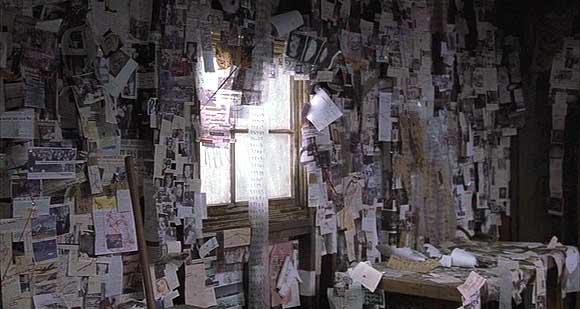
I'm assuming Aunt Rosa died in the Holocaust. Did they live in Europe during this time? How did this family get away? Did they flee as so many others attempted?
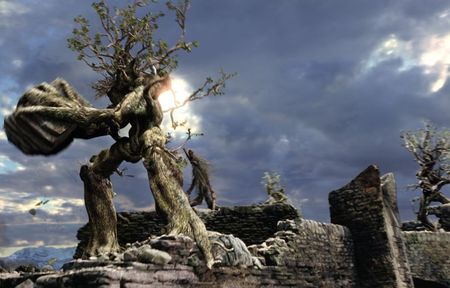
The darkly gesticulating trees make me think of the Ents from The Lord of the Rings, but perhaps a bit creepier and less helpful.
The mention of shadows, of storms and running water, of coats in store windows... This man lives a haunted life.

If the uncle is Isaac, then why do the mom and dad so resemble Abraham and Sarah? It makes sense that the uncle providing for them is Isaac because he gave birth to Jacob who was considered a father to the Israelites. The fact that the parents were married twenty years before they had the son continually reminds me of the biblical couple who conceived so late in life.
There is one interaction I don't quite understand, but I keep coming back to it:
"I can't sleep becuase I am dying," he said, and lay down on the couch.
"Is it your stomach? Do you want me to call Dr. Solov?"
"No doctors, no doctors," he moaned. "To the devil with doctors! We must get him out of there quick. Otherwise, we'll be responsible... Responsible!"
Is the man dying because of guilt for his son's condition? Is he really dying and the mention of doctors reminds him that the doctors at the sanitarium aren't helping his son? For some reason, I can't move past this. He so abruptly states they must bring their son home. Why? What leads him to this idea? Why is it suddenly such an important task?
WHO IS CHARLIE? This is driving me nuts. It's haunting me. I keep thinking of all the Charlie's I know, of the phone ringing three times. What does it mean? Is it a trick? Is this Nabokov planting false clues? I cannot tell.
The story starts and ends with the jams. They're so small, yet so significant. I'm not sure what significance they hold, perhaps other than tying the story together, but it is the perfect example of Birkerts' notion that "the merest detail" can be the case-solving clue. Or maybe I'm not on to anything here...
Tuesday, September 10, 2013
Ranting & Raving
The world is so full of contradictions. Though I do believe that we can create our own realities, we are also so susceptible to the realities of others. I'll give you an example. I study psychology and sociology. Many of my friends are engineers and give me a hard time about my choice of majors. They say that my classes are all BS and that they're easy. And lately, I've noticed that I agree with them and I joke along with them. I've come to value my degree less because of the influence of others. How did I let that happen? It's pretty disconcerting. I shrugged off their comments and didn't defend myself for so long that their message started to eat away at my belief. Now, in some ways I truly view my degree as inferior. I have let their notion that "social sciences" and "making less money upon graduation" means my degree is worth less. I've started to believe that because I spend less time on homework, my degree is easier.
But do they ever have to think for themselves? Aren't they being taught to think, whereas I'm being taught about how we think and being taught to challenge everything I learn in my classes? I'm intellectually challenged every day. I look at how the human brain works, at how we as humans interact with one another, and at the fact that the majority of our "reality" has been constructed by us so how do we know whether or not its real? Now I'm getting on my high horse of why my studies are more important, which isn't true, either. They are different. Without engineers, we wouldn't have the same technological advances, modern medicine, infrastructure. Some really important things. Why, then, is it also so hard to value looking at the way our brain works or how humans interact? Why do we as humans have such a hard time accepting multiple truths at once? Why do things have to be better or worse rather than also? (See thoughts above: I am just as guilty of it as the next person.)
Every day, we try to simplify the world around us in order to comprehend it. We whittle it down into numbers or words or other terms which we think we can understand. We put judgments on things to determine what is more important. But do we really understand and do we have any idea where those value judgments should be placed? We created those words to describe that phenomena, meaning our description and potentially our understanding is limited to the words we have to describe it. We oversimplify. We put things in groups, because if everything had its own box that would be difficult to interpret and understand. That's why we have stereotypes, but stereotypes aren't always accurate.
So are we not using our brains to their fullest capacity to understand the world around us or are we incapable? I'd argue that the world is too vast and complicated for us as humans to fully understand at this point in time. We can only know parts of it. Yet it is a valiant effort to seek to know more in any field, be it in engineering or the social sciences.
Why don't others see these fields as equally important?
Why don't others see these fields as equally important?
1. Because in our capitalistic society, we value money.
2. Engineers make more money than social scientists.
3. Therefore, engineering is more important (and better) than social sciences.
Again, with the oversimplification. However, there are many people in this nation and this world that view it this way. Whether they realize why they view the "soft" sciences as inferior or they are completely oblivious, it is a socially accepted view. And in a world with more information than any one person can possibly comprehend, isn't it enough to simply buy into what society says rather than challenging these beliefs and coming up with a more complicated view?
Subscribe to:
Posts (Atom)